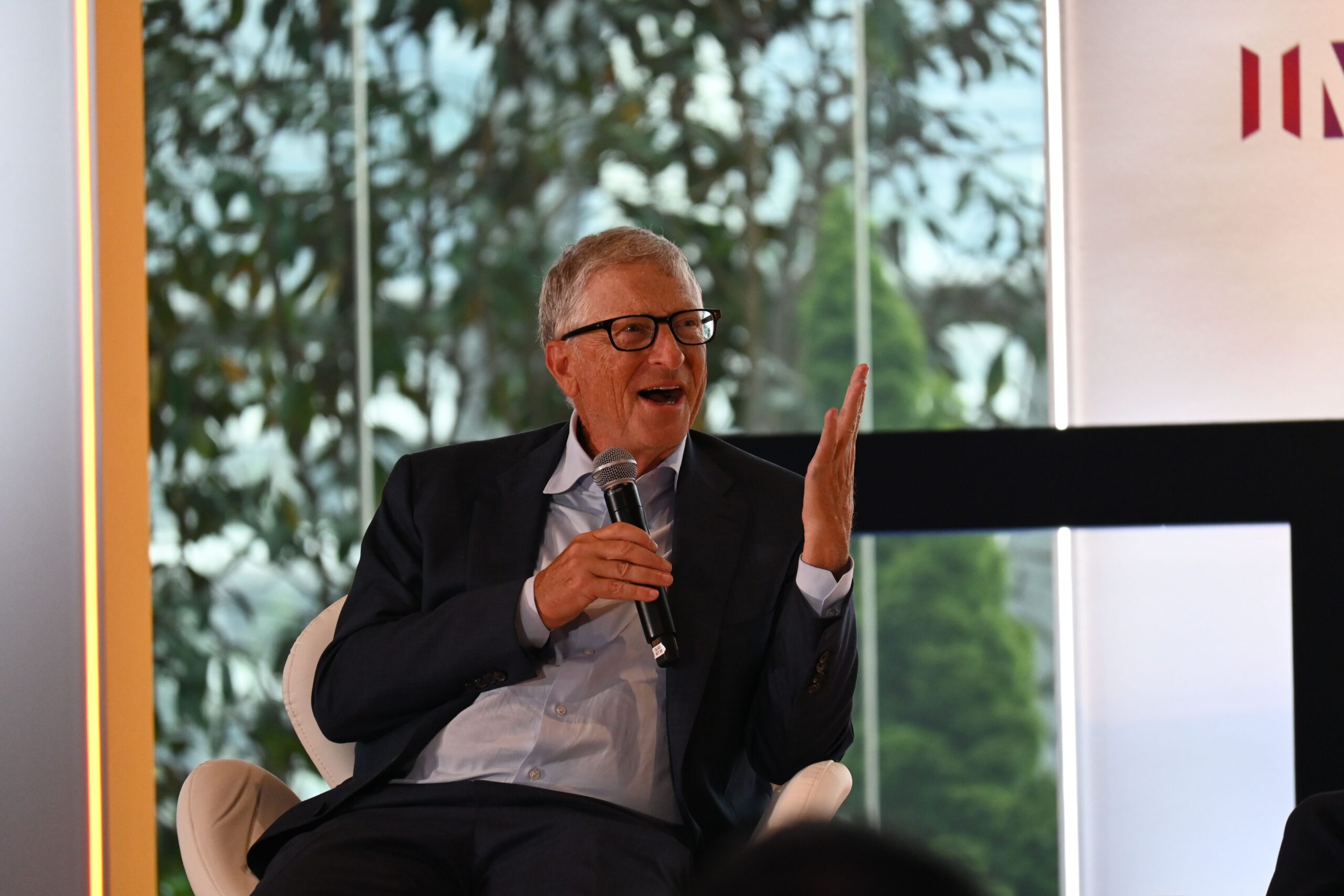
Microsoft co-founder Bill Gates believes that rich countries “owe it to the world” to get themselves down to net zero emissions.
Gates, who is also the chairman of the non-profit Gates Foundation and is considered one of the most vocal advocates for climate change, was speaking at Ecosperity in Singapore. Ecosperity is a global engagement and advocacy platform for sustainability run by Temasek.
While speaking at the event, Gates emphasized the critical and strategic roles affluent nations can play in combating climate change. He believes rich countries bear a moral responsibility to spearhead efforts toward achieving net-zero greenhouse gas emissions, given their impact on global emissions and their capacity for innovation.
“Wealthy countries have the resources and technological capabilities to drive the innovations necessary for a sustainable future,” Gates stated. He insisted that, irrespective of whether the rest of the world adopts it or not, rich countries must get to net zero and set examples for all.
Due to practical limitations and varying circumstances, rules and expectations are not the same for everyone. “There are levels of emissions that are small enough that the temperature worsening actually is not a problem,” he said. But still, affluent countries need to show the way in order to reinforce that there are solutions and technologies meant for the climate crisis.
As defined by the United Nations,
“net zero means cutting carbon emissions to a small amount of residual emissions that can be absorbed and durably stored by nature and other carbon dioxide removal measures, leaving zero in the atmosphere.”
In this context, Gates’ comments align with the UN definition: that the goal doesn’t mean complete elimination of emissions across geographies, but rather to reduce emissions to levels that can be effectively neutralized by carbon removal methods. This focuses on balancing remaining emissions with natural or technological carbon absorption.
Gates has also urged the world to be bolder with innovation investment as he believes that it’s not possible for entire world to get net zero by 2050.
The UN as per Paris Agreement has a target to keep global warming under 1.5°C. To reach there, emissions need to be reduced by 45% by 2030 and reach net zero by 2050. Gates believes that the main challenge in achieving net-zero emissions by 2050 would be securing risk capital to fund bold innovative solutions that can help us reach there.
Existing technologies can only reduce emissions to a limited extent. While the adoption of new technologies is broadly desired (but remains slow), high costs of decarbonization continues to be a major struggle. Innovation in net-zero movement is critical because about 35% of the CO2 emission reductions needed in the recently updated Net Zero Emissions by 2050 Scenario (NZE Scenario) in 2050 come from technologies that are still in development and thus have not reached markets at commercial scale.
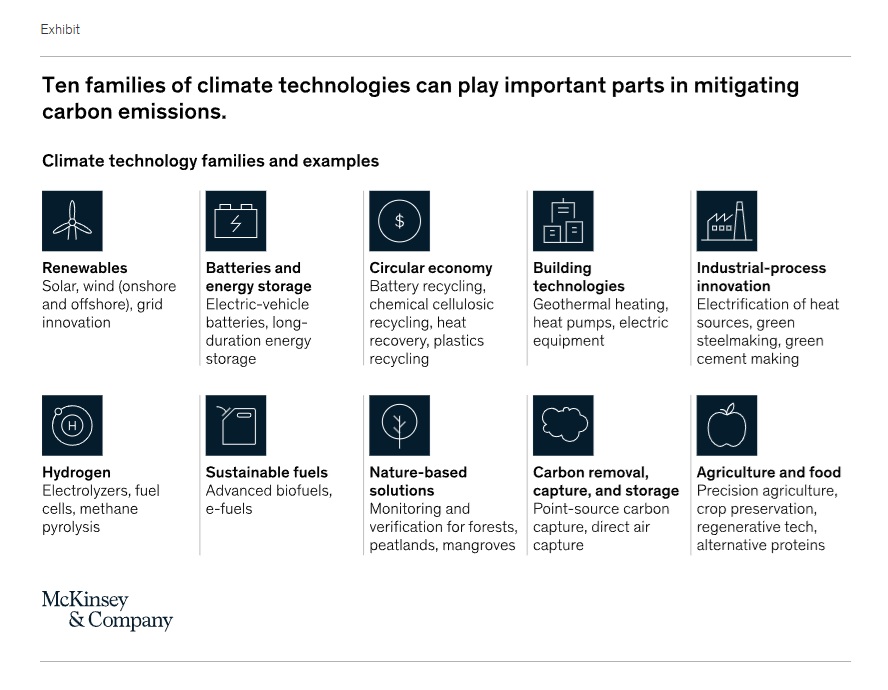
McKinsey calls every climate tech vertical as family and demonstrates ten families of climate technologies as critical to meeting the net-zero challenge.
Gates, who is also founder of climate investment firm Breakthrough Energy, explains why Singapore is well-placed as an incubator for regional deep-tech start-ups that deal with climate issues.